
How Bigpicture tackles stain variability
As the field of pathology moves towards digital (and AI-driven) workflows, it’s becoming increasingly important to ensure the quality and consistency of pathology images. A key factor for building robust, AI-ready datasets is the standardization of staining.
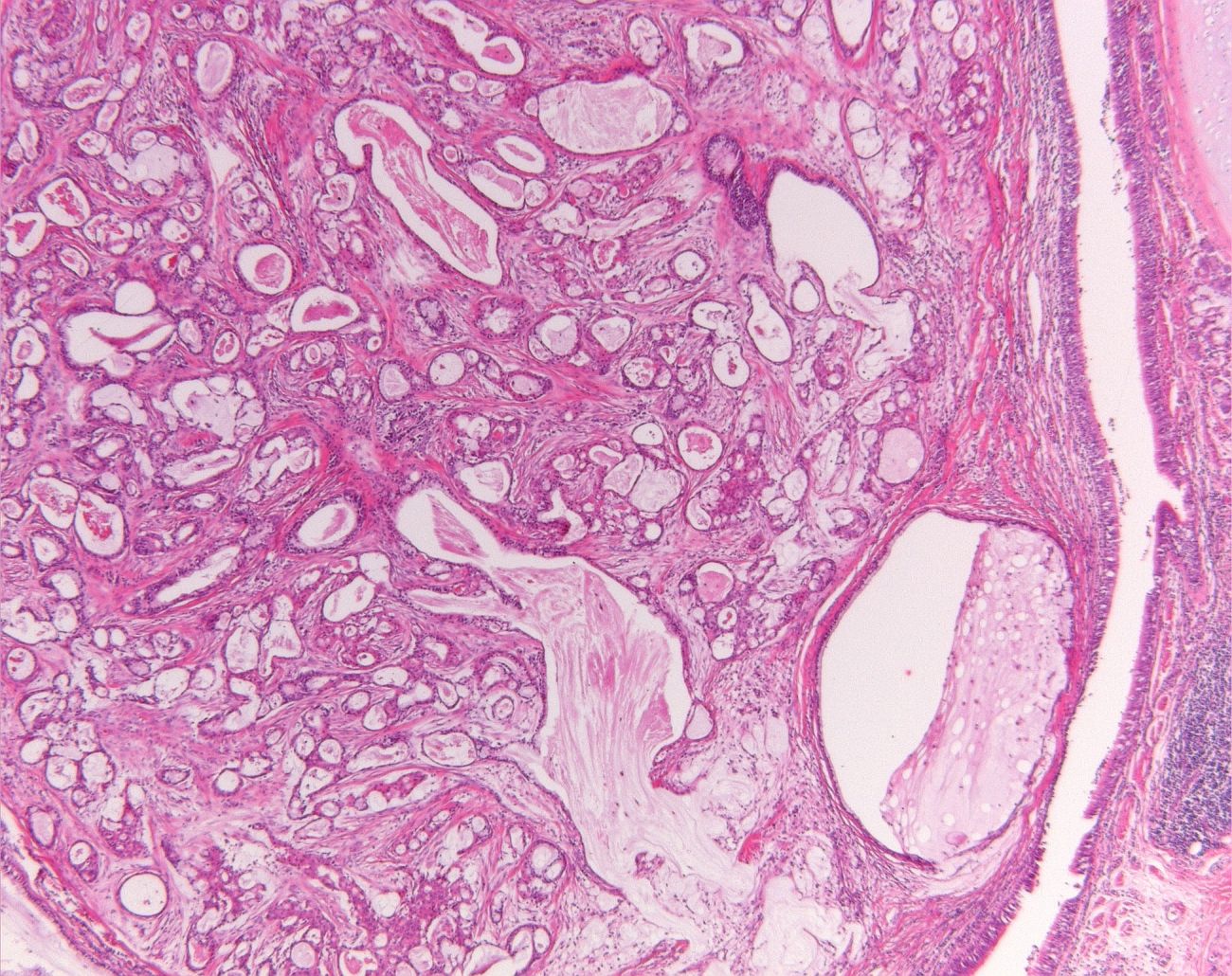
We spoke to Bigpicture members Catriona Dunn, Hayley Pye, and David Brettle from Leeds Teaching Hospitals NHS Trust about TANGO, a tool designed to objectively assess stain quality. They explain how this innovation is helping Bigpicture to lay the groundwork for more consistent, scalable, and clinically useful digital pathology.
Staining is an essential step in preparing tissue samples for analysis. While pathologists can adapt to slight variations in staining, AI models rely on consistency. Without standardized staining practices, AI algorithms may struggle to correctly interpret pathology images across different labs, limiting their reliability and scalability.
At Leeds Teaching Hospitals NHS Trust, a team of researchers – including David, Hayley and Catriona – has been investigating this issue for years. Their work led to the development of TANGO, a tool designed to measure and assess stain variability in a standardized, objective way. "TANGO was developed to address the challenge of stain variability but integrating it into the Bigpicture project now allows us to apply it on a much larger scale," explains David. "This is an opportunity to use the tool across multiple labs and generate real-world evidence on how stain variability affects AI development."

The challenge of stain variability
Stain variability is a well-documented issue in pathology. Labs across the world use different staining protocols, leading to variations in colour intensity and contrast. While these differences may not significantly impact human pathologists, they create inconsistencies in datasets used for AI training. "We’ve collected data from 51 different staining systems worldwide, and the variation is striking," says Hayley. "If we want AI to work effectively across different institutions, we need to ensure that the data it learns from is as uniform and high-quality as possible."
The Bigpicture initiative aims to build the largest digital pathology repository of whole slide images (WSI) used for research and AI development. Ensuring stain consistency across labs is important to making the uploaded data robust, scalable, and useful for AI applications. By incorporating TANGO, Bigpicture is taking an important step toward improving data quality and AI readiness.
Introducing TANGO: a new approach to stain assessment
Traditional stain quality assessments rely on visual inspection, which is subjective and varies between labs. TANGO (Tissue-stain ANalysis and Grading Objective tool) provides a standardized and quantifiable method to assess stain consistency. "TANGO is essentially a biopolymer film applied to a standard pathology slide," explains Catriona. "When processed alongside tissue samples, it absorbs the stain in a measurable way, allowing us to objectively assess how consistent a lab’s staining process is."
TANGO in action (video):
How Bigpicture is using TANGO
Now integrated into Bigpicture, TANGO is being used to evaluate stain variability across participating labs. Contributing labs receive TANGO slides, process them alongside their usual tissue samples, and return them for analysis. "This is an exciting opportunity for slide contributors," says David. "For the first time, we can objectively measure staining differences and use that knowledge to improve quality across the board. That’s a game-changer for digital pathology."
For Bigpicture, this means higher-quality, more uniform datasets, ultimately making AI models more reliable and applicable across different institutions. "More consistency in staining means AI will be easier to develop and deploy," adds Hayley.

Why this matters for healthcare
While stain consistency may seem like a technical challenge, its implications extend to patient care and the future of AI-assisted diagnostics. AI models trained on high-quality, standardized data will be more effective in supporting faster and more accurate diagnoses, ultimately benefiting healthcare professionals and patients alike. "If we don’t standardize staining, we risk developing AI models that only work in certain settings," says David. "We need solutions that benefit all patients, no matter where their samples are analysed."
Latest news

What does it take to turn 120,000 clinical pathology slides into data that researchers can actually use...
Read more
Being unique is one thing. Being valuable enough for organizations to rely on is another. Dr. Page...
Read more
The biggest hurdle for pathology AI may no longer be building the technology, but proving it works...
Read more